

For people who already give to charity, how the gift is made can matter almost as much as how much is given.
A qualified charitable distribution, or QCD, is a way for eligible IRA owners to send money directly from an IRA to a qualified charity. That change in the path of the money can affect how the distribution is treated for tax purposes.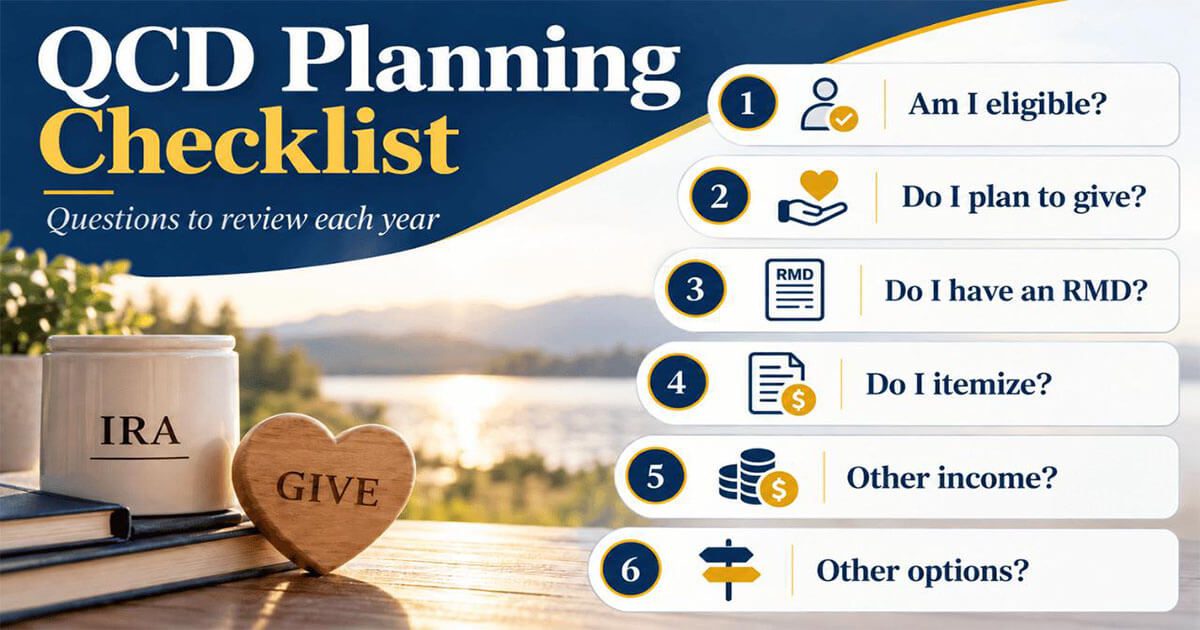
A QCD generally moves money directly from an eligible IRA to a qualified charity. The word directly matters. The money is not first distributed to the IRA owner, deposited into a checking account and then given away later. To receive the intended tax treatment, the distribution must follow the applicable requirements.
Age is one of those requirements. QCD eligibility begins at age 70½. That age is separate from the age when required minimum distributions, or RMDs, begin. Someone may become eligible to make a QCD before being required to take an RMD.
Consider two ways to make the same charitable gift. Suppose someone over age 70½ already plans to give $10,000 to qualified charities during the year. One option is to take $10,000 from a traditional IRA and then give that money to charity. The IRA distribution generally counts as taxable income, and the person may receive a charitable deduction depending on the tax situation. However, not everyone itemizes deductions.
With a properly completed QCD, that same $10,000 may go directly from the IRA to the charity and generally may be left out of taxable income. The donor does not also deduct the same $10,000. The goal is not to receive two tax benefits from one gift. It is to consider whether there is a more intentional way to fund a gift that was already going to be made.
QCDs can become especially important once RMDs begin. Some retirees are required to take money from retirement accounts even when they do not need all of it for living expenses. If charitable giving is already part of the plan, a QCD may be able to satisfy all or part of an RMD.