How to Build a Retirement Spending Strategy

For decades, saving for retirement is the goal.

You contribute to a 401(k), invest, and keep building. Then retirement arrives and the direction changes. Instead of putting money away, you have to decide how much you can comfortably spend and where that money should come from. A retirement spending strategy helps turn the assets you accumulated into income that supports your life after work.
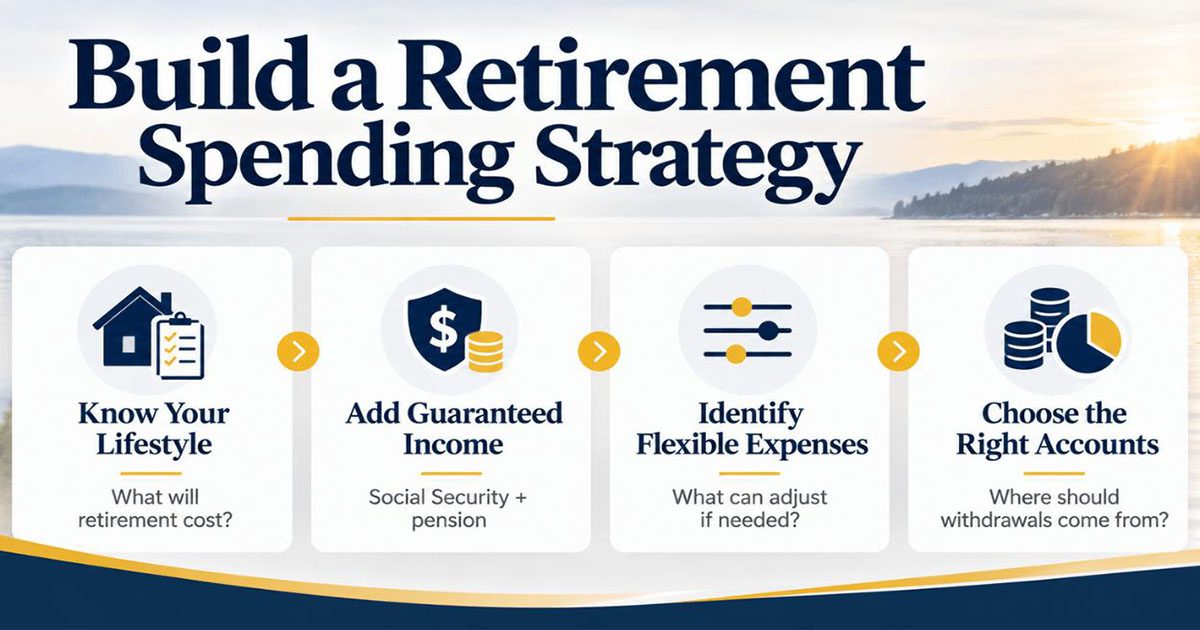
The first step is not choosing a withdrawal percentage. It is understanding what retirement will actually cost. Some expenses are needs; housing, groceries, utilities, health care, insurance, and taxes. Others are wants that make retirement feel like your own, including travel, golf, time with grandchildren, or charitable giving.

Those wants are not automatically expenses that should be cut. They may be part of the reason you spent years saving in the first place. Retirement spending can also change from one year to the next, so it makes sense to understand the life you are trying to support before deciding withdrawals.

Once you know what needs to go out, you can look at what needs to come in. In retirement, your income may come from several places, including Social Security, a pension, an IRA, a 401(k), taxable investments, or cash.

The key is to look at those sources together. If Social Security or a pension covers part of your spending, the remaining gap must be filled from somewhere else. That is when a collection of accounts begins to function as a retirement income strategy.

A rule of thumb such as the 4% rule can provide a starting framework, but it does not mean every retiree should spend the same percentage. Two families can retire with identical investment balances and have very different plans. One may have a pension while the other does not. One may want to leave a significant legacy, while another wants to use more of the money during retirement.

A retirement spending strategy should address questions such as:

  • What does the retirement lifestyle you are planning actually require?
  • How much of your spending is already covered by Social Security or a pension?
  • Which expenses could be adjusted temporarily if conditions become challenging?
  • Which accounts should be used to provide the money you need?

That flexibility creates guardrails around spending. Rather than choosing one number and never changing it, you can decide ahead of time what might cause an adjustment. If the plan remains healthy, there may be room for a trip or purchase. During a difficult period, a vehicle replacement or major trip might be delayed. The goal is to make intentional adjustments rather than react to every market decline.

Where the money comes from also matters. Taking $20,000 from a traditional IRA is not necessarily treated the same as taking it from a Roth account, cash, or a taxable investment account. That is why spending, investing, and taxes should not be viewed as separate decisions. The question is not only, “Where can I get the money?” but also, “Where should this particular dollar come from?”

A retirement spending strategy is not simply designed to prevent overspending. It can also help keep years of good saving habits from turning into a fear of using the money you intentionally accumulated. Whether the goal is a family trip, a new vehicle, helping a grandchild, or making a charitable gift, the plan should help answer three questions: Can we afford it? Where should the money come from? Does anything else need to change?

Retirement planning does not stop when work does. A spending strategy is about intentionally using your resources to support your life after work.

Financial Enhancement Group is an SEC Registered Investment Advisor.

This content is for educational purposes only and is not intended to be financial, investment, or tax advice. Please consult with a qualified advisor regarding your specific situation.

Article Book Img

Get Your
Life-Change Checklists

Step-by-Step Guides for Confident Decisions

Icon Quote

“Give while it’s meaningful.
Give while you’re here.”

Article Book Img 02
Joseph Clark, CFP®

Managing Partner

Other Articles You Might Like

Stay Informed, Stay Confident

Whether you’re making day-to-day financial choices or preparing for major life transitions, these articles are here to help you navigate your journey with purpose.

We encourage you to share articles with family members, friends, or anyone who could benefit from tax-smart retirement strategies and clear, actionable advice.

Explore our latest financial planning articles below and take the next step toward living Your Life After Work™ with clarity and confidence.

Privacy Overview

This website uses cookies so that we can provide you with the best user experience possible. Cookie information is stored in your browser and performs functions such as recognising you when you return to our website and helping our team to understand which sections of the website you find most interesting and useful.