Why Retirees Are Targeted by Scammers and How to Recognize the Pattern

Scams aimed at retirees are not simply a matter of someone being gullible or careless.

In many cases, the real issue is timing. Scammers often look for moments when a person is going through a major life transition, making important financial decisions and potentially doing so with fewer people around to offer a second opinion.
Retirees can be attractive targets because they may hold decades of accumulated savings while also facing transitions that change the way financial decisions are made. The loss of a spouse, retirement, the sale of a home or the receipt of an inheritance can all create periods when routines and support systems are disrupted.

Isolation can make those moments even more difficult. Adult children may live far away. A spouse who once shared financial responsibilities may no longer be there. Daily routines may involve fewer people checking in. The result can be fewer eyes on a financial decision at exactly the time when another perspective could matter most.

The scale of the issue is significant. AARP’s Elder Financial Exploitation Study estimates that about $28.8 billion is lost among adults age 60 and older because of fraud and scams. The number helps illustrate why understanding how these situations develop is so important.

Scammers may also time their approach around information connected to a major transition. An obituary can reveal that someone recently lost a spouse. A retirement announcement, home sale or inheritance can signal another significant change. During those periods, a person may be making decisions alone for the first time while also dealing with emotional strain and a support system that has not yet fully adjusted.


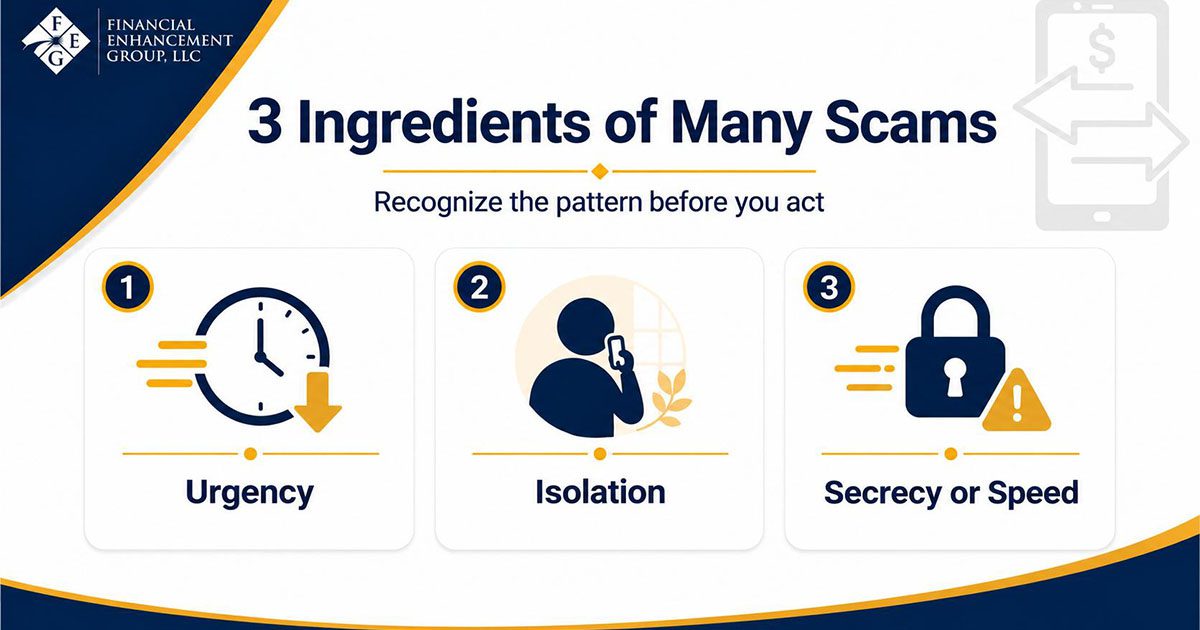
Instead of trying to memorize every possible scam, it can be more useful to recognize the pattern many of them share. Three ingredients tend to appear again and again:

  • Urgency. The message creates pressure to act immediately before there is time to slow down and think.
  • Isolation. The situation pushes the person toward making a decision without involving the people they normally trust.
  • Secrecy or speed. The scammer may insist that no one else be told or that money or information must be provided right away.

These elements can appear in very different stories. A caller may claim to be from the Social Security Administration and say immediate action is required. Another may pretend to be a grandchild in trouble who needs money and asks that the situation be kept secret.

The details may change, but the common thread is the same: the scammer wants action before anyone else becomes involved.

That is why recognizing red flags is only part of the defense. Red flags are hardest to identify when someone is already alone, emotional and under pressure. A trusted person or team that is already in place can provide another set of eyes before money is wired, account information is shared or another significant action is taken.

Even a brief conversation before acting can interrupt the urgency a scammer is trying to create. It gives someone an opportunity to slow down, explain what happened and consider whether the request makes sense.

The most important takeaway is not to assume scams only happen to people who are naive. Retirees may be targeted because they have accumulated savings and because major life transitions can temporarily create isolation and uncertainty. Understanding the pattern — urgency, isolation and secrecy — can make those attempts easier to recognize before a pressured decision becomes a costly one.

Financial Enhancement Group is an SEC Registered Investment Advisor.

This content is for educational purposes only and is not intended to be financial, investment, or tax advice. Please consult with a qualified advisor regarding your specific situation.

Article Book Img

Get Your
Life-Change Checklists

Step-by-Step Guides for Confident Decisions

Icon Quote

“Give while it’s meaningful.
Give while you’re here.”

Article Book Img 02
Joseph Clark, CFP®

Managing Partner

Other Articles You Might Like

Stay Informed, Stay Confident

Whether you’re making day-to-day financial choices or preparing for major life transitions, these articles are here to help you navigate your journey with purpose.

We encourage you to share articles with family members, friends, or anyone who could benefit from tax-smart retirement strategies and clear, actionable advice.

Explore our latest financial planning articles below and take the next step toward living Your Life After Work™ with clarity and confidence.

Privacy Overview

This website uses cookies so that we can provide you with the best user experience possible. Cookie information is stored in your browser and performs functions such as recognising you when you return to our website and helping our team to understand which sections of the website you find most interesting and useful.