

Asset allocation is one of the foundational concepts in investing, yet it’s often misunderstood.
At its most basic level, asset allocation refers to how your investments are divided among different types of assets. The most common categories people are familiar with are stocks, bonds, and cash, though each of these includes its own subcategories.
The purpose of asset allocation is not just organization — it’s risk management. Rather than concentrating all your money in one investment or one type of asset, the goal is to spread it across multiple areas. This helps reduce the impact that any single investment or asset class can have on your overall financial outcome.
One common risk we see comes from overconcentration in one company. It’s easy to look back and identify investments that performed well and think about what could have been. However, since 1926 only roughly 42% of stocks have actually outperformed a one-month US treasury bill over their lifetime. This is not to dissuade people from participating in the market, but rather to show just how difficult it is to get individual stock picking right. This highlights why diversification plays such an important role.
When assets are spread across different categories, performance tends to vary from year-to-year. One year some asset classes may outperform the others, and the next year they may lag the other categories. By owning a mix, investors are not relying on a single outcome. Instead, they are smoothing out their experience over time and reducing the likelihood that one poor-performing area will significantly impact their portfolio.
Asset allocation also ties closely to your personal financial goals. The way assets are divided should reflect where you are in your financial journey and when the money will be needed. Short-term goals require a different approach from long-term goals. Time frame matters. For example:
- From 1936 through 2025, the U.S. stock market never had negative returns on a rolling 20-year basis. And since 1972, the S&P 500 hasn’t had negative returns on any rolling time frame for longer than 12 years.[ Long-Term Investing: Time in the Market Can Top Market Timing | iShares] If you have a long-term goal, the S&P 500 historically is not a bad destination to see your accounts grow.
- Conversely, if you had a goal to purchase a house on January 1, 2023, and you placed all your house fund in the S&P 500, your fund would have decreased by (18.11%).[ S&P 500 Total Returns by Year Since 1926] As of this writing, the S&P 500 has more than recovered from 2022’s poor market year. Funds removed from the market for short-term goals did not experience this recovery.
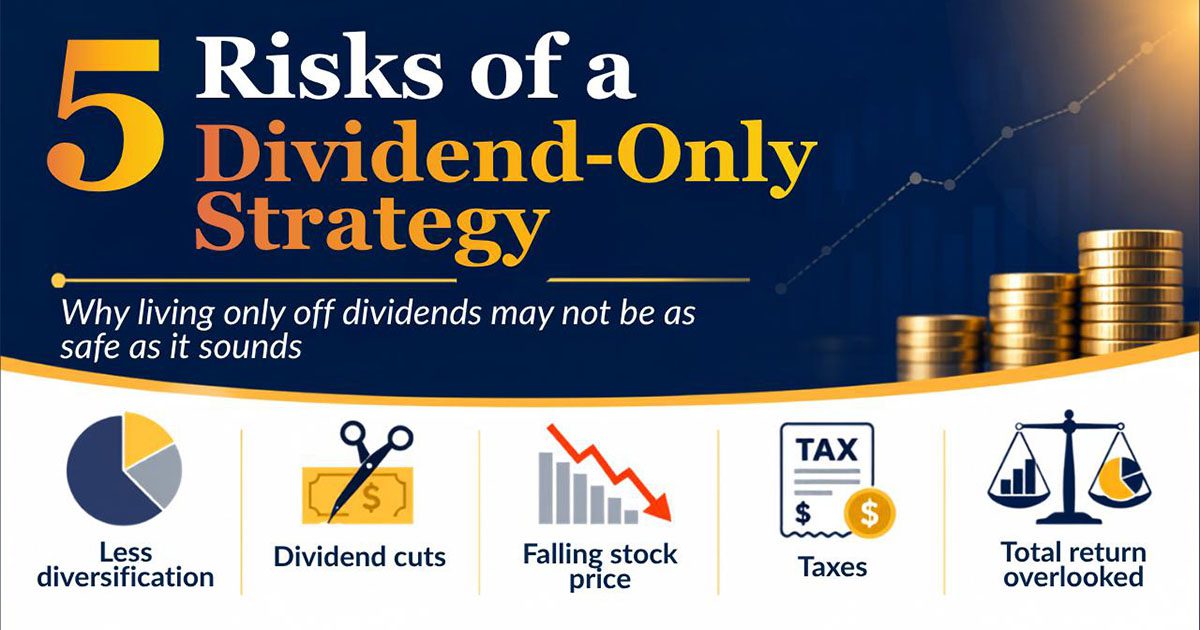
Another important concept is asset location. While allocation focuses on what you own, location focuses on where those assets are held. Different accounts have different tax treatments, and placing assets in the appropriate accounts can help reduce unnecessary tax impact over time. We meet many investors who like to own stocks the produce dividends. These can create a tax drag on your investments if they are in non-retirement style accounts. Inside of IRA accounts, that becomes less of an issue. Mutual funds are another investment that can create tax drag, as they will create phantom capital gains for investors who just hold them, because mutual funds must distribute realized capital gains to shareholders, even if the investors did not sell shares.
Key principles to understand about asset allocation include the following:
- Asset allocation refers to dividing investments among categories like stocks, bonds, and cash.
_______________
- Long-Term Investing: Time in the Market Can Top Market Timing | iShares
- S&P 500 Total Returns by Year Since 1926
- Diversification helps reduce the risk of being overly concentrated in one investment.
- Different asset classes perform differently over time, helping to potentially smooth out your financial journey.
- Investment decisions should align with the timing of financial goals.
- Asset location considers how investments are positioned across different account types to fit your needs and eliminate potential tax inefficiency.
It’s also important to recognize that investment environments change. Time periods will exist when certain sectors or types of investments dominate performance, and other times will exist when a broader or more active approach becomes more effective. Diversification helps investors avoid constantly trying to predict which area will be the next-best performer.
Ultimately, asset allocation is about building a structure that supports your financial journey. By combining different types of investments and aligning them with your goals, you create a more resilient approach — one that is designed to navigate both strong markets and challenging ones over time.
Financial Enhancement Group is an SEC Registered Investment Advisor.