How Do State Taxes Affect Your Retirement Income?

When planning for taxes in retirement, federal income taxes often receive the most attention.

IRA withdrawals, Social Security benefits, and required minimum distributions all play a role. However, state taxes in retirement can also significantly affect how much income you get to keep. Two retirees with similar income sources could face very different tax outcomes simply because they live in different states.

Understanding these differences is an important part of planning for life after work.

Federal and State Taxes Work Differently

Federal and state income taxes operate under separate systems. Just because income is taxable on a federal return does not necessarily mean it will be taxed the same way by your state.

Some states have no broad-based individual income tax. Others exempt certain retirement distributions, while some tax a greater portion of retirement income.

Consider Indiana and Illinois. Indiana does not tax Social Security benefits, but many pension distributions and traditional IRA withdrawals remain subject to state income tax.

Illinois, on the other hand, generally exempts many common forms of qualifying retirement income, including eligible pension and IRA distributions.

The income source might be identical, but the amount remaining after state taxes could look very different.

Should You Move to a State With Lower Taxes?

Relocating during retirement can offer tax advantages, but income taxes should not be the only consideration.

A state without an individual income tax does not automatically have the lowest overall cost of living. Property taxes, sales taxes, insurance, and housing expenses can all affect your financial picture.

Beyond finances, moving could change your proximity to family, access to healthcare, and involvement in your community.

A lower tax bill can be beneficial, but the decision should support the retirement lifestyle you want to enjoy.

How Your Retirement Accounts Affect State Taxes

Where retirement income comes from matters just as much as where you live.

Traditional IRA withdrawals are generally subject to ordinary income taxes, while qualified Roth IRA withdrawals can generally be received tax-free. Regular investment accounts may generate capital gains, dividends, or interest.

States can treat these income sources differently from the federal government.

That makes deciding which account to withdraw from more complicated than simply choosing the account with the largest balance.

Roth conversions also deserve consideration. If you’re planning to relocate, the timing of a conversion could affect your total tax cost.

These decisions are best evaluated together rather than independently.

Questions to Consider Before Year-End

Annual tax planning provides an opportunity to review upcoming decisions before the calendar year closes.

Important questions include:

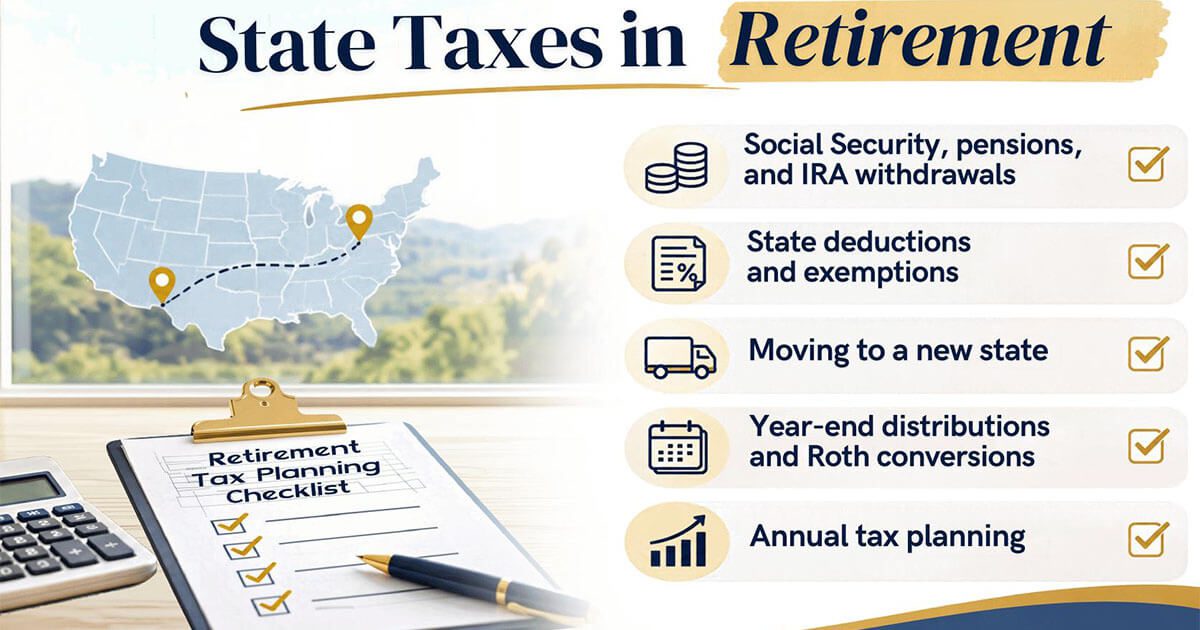
  • Do you understand how your state taxes Social Security, pensions, and retirement account withdrawals?
  • Are there state deductions or exemptions you have not considered?
  • If you’re relocating, have you compared taxes and overall living expenses?
  • Are additional retirement distributions or Roth conversions planned before December 31?
  • Have you considered these decisions as part of your annual tax plan?

Changes such as retiring, beginning pension payments, or starting required minimum distributions can also affect your tax picture.

Because state tax laws can change, reviewing these considerations annually is important. Waiting until tax filing season means many opportunities to make adjustments have already passed.

Keeping More of Your Retirement Income

Retirement planning involves more than building sufficient savings. It also involves understanding how taxes influence the money available to support your lifestyle.

A decision that makes sense in one state might produce a different result somewhere else. Even the timing of a planned withdrawal or Roth conversion could change its tax consequences.

Understanding those differences before making decisions allows state taxes to become part of a coordinated retirement income strategy rather than an unexpected expense.

Financial Enhancement Group is an SEC Registered Investment Advisor.

This content is for educational purposes only and is not intended to be financial, investment, or tax advice. Please consult with a qualified advisor regarding your specific situation.

Article Book Img

Get Your
Life-Change Checklists

Step-by-Step Guides for Confident Decisions

Icon Quote

“Give while it’s meaningful.
Give while you’re here.”

Article Book Img 02
Joseph Clark, CFP®

Managing Partner

Other Articles You Might Like

Stay Informed, Stay Confident

Whether you’re making day-to-day financial choices or preparing for major life transitions, these articles are here to help you navigate your journey with purpose.

We encourage you to share articles with family members, friends, or anyone who could benefit from tax-smart retirement strategies and clear, actionable advice.

Explore our latest financial planning articles below and take the next step toward living Your Life After Work™ with clarity and confidence.

Privacy Overview

This website uses cookies so that we can provide you with the best user experience possible. Cookie information is stored in your browser and performs functions such as recognising you when you return to our website and helping our team to understand which sections of the website you find most interesting and useful.