
[vc_row][vc_column width=”1/4″ offset=”vc_hidden-xs”][vc_widget_sidebar sidebar_id=”sidebar-main”][/vc_column][vc_column width=”3/4″][vc_column_text]
June remains the most popular month for weddings, but August, September and October are all busy months for nuptials. Diamonds are a traditional gift to commemorate an engagement, or celebrate a milestone anniversary. Stocks are a less common (and many people would say less romantic) gift!
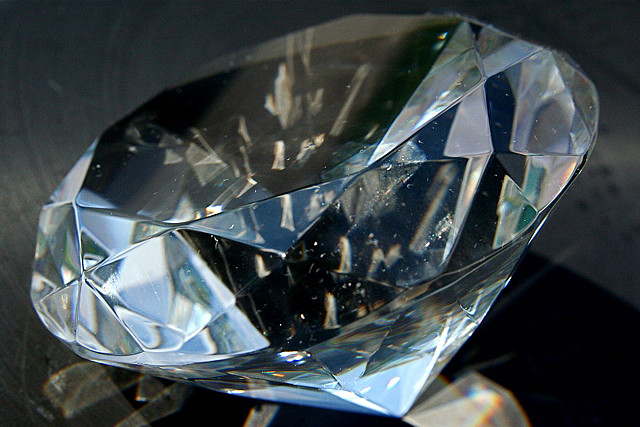
Fear not – I’m not advocating we replace diamond solitaires with stock certificates. But it might surprise you to consider that the quality of stocks and diamonds can be viewed through a similar lens! When considering the “four C’s” of Color, Clarity, Cut and Carat weight, what creates values for gemstones also applies to stocks.
A diamond’s “color” actually refers to absence of color. The more color, the lower the gem’s quality. The same is true for businesses. The more transparent a business is, the easier it is for analysts and investors to properly evaluate the business. In contrast, the more opaque the model, the more confusing it becomes for investors. Google recently reorganized its stock to offer investors greater transparency.
Clarity refers to defects on the gem’s inside or outside. Diamonds are formed over eons, with tremendous pressure and heat refining imperfections. Investors can look at a company’s investments over time, including its use of cash, management tenure and performance, and contrast all of these under various economic cycles. Data viewed over longer time periods improves clarity when determining a reasonable price for the stock.
Surprisingly, cut doesn’t’ describe a particular shape as much as it indicates how a diamond reflects light. Some economists believe our economy functions in a four or five-year cycle, cresting at a peak, contracting into recession and finally expanding until it reaches another peak.
This theory posits that the economy moves in predictable cycles and that different types of companies will naturally fare better at different stages of the cycle. For example, consumer staple goods companies would be expected to perform better in a recession than industrial companies under such a mindset. This perspective seems reasonable enough, but it is far from perfect when the economic landscape shows two opposing (staples and discretionary) sectors moving in the same direction, as we currently have in our economy.
The final C when evaluating diamonds is carat weight, which often serves as a price indicator. The investment world would replace carat weight with market capitalization to determine a stock’s size, but would also consider factors like price-to-earnings (PE) ratio to compare expenses between companies. The higher the ratio, the more investors pay for the stock relative to current earnings. That’s why the PE ratio is only one metric in the valuation. Typically companies with smaller market capitalization have higher PE ratios than businesses with large market capitalization's.
Applying the metrics used to evaluate gems to the process of evaluating companies and their stocks may seem unusual but the point is simple: It isn’t just a stone and it’s not just a stock. We are in a stock picker’s market right now and may the best gemologist win!
Disclaimer: Do not construe anything written in this post or this blog in its entirety as a recommendation, research, or an offer to buy or sell any securities. Everything in this post is meant for educational and entertainment purposes only. I or my affiliates may hold positions in securities mentioned in the blog. Please see my Disclosure page for full disclaimer.[/vc_column_text][/vc_column][/vc_row][vc_row][vc_column offset=”vc_hidden-lg vc_hidden-md vc_hidden-sm”][vc_widget_sidebar sidebar_id=”sidebar-main”][/vc_column][/vc_row]